
2026 price guide
Roof replacement cost in San Diego
What a new roof really costs in San Diego County this year, by material, plus the stuff that pushes a quote up and the few ways to bring it back down.
“How much is a new roof?” is the first thing almost everyone asks us, usually before we’ve even seen the house. It’s a fair question. It’s also one we can’t answer to the dollar from the driveway, because two houses on the same street in Clairemont can come in $8,000 apart.
What we can do is give you honest ranges. This guide uses what we’re quoting and seeing around San Diego County in 2026, for the roofs we actually put on here: shingle, tile, metal and flat. You’ll see what drives the number, where the surprise costs hide, and how to read a quote so you’re comparing the same job.
One note before the numbers. These are ballparks, not bids. Your roof’s size, pitch, access and what’s under the old roofing all matter, and we’ll go through each one.
Quick answer
The short answer
Most San Diego homeowners replacing a shingle roof on an average single-story or two-story house are paying somewhere around $12,000 to $22,000 in 2026. That’s for a roof with about 2,000 square feet of surface, which is common for a 1,600 to 1,900 square foot home once you add the overhangs and the slope.
Tile and metal cost more. A brand new concrete tile roof on that same house usually lands between $24,000 and $40,000. Clay can go past $60,000 on a big or steep roof. If you already have tile that’s in good shape, replacing just the underlayment underneath it is often the better deal, and we’ll get to that.
By material
Roof replacement cost by roof type
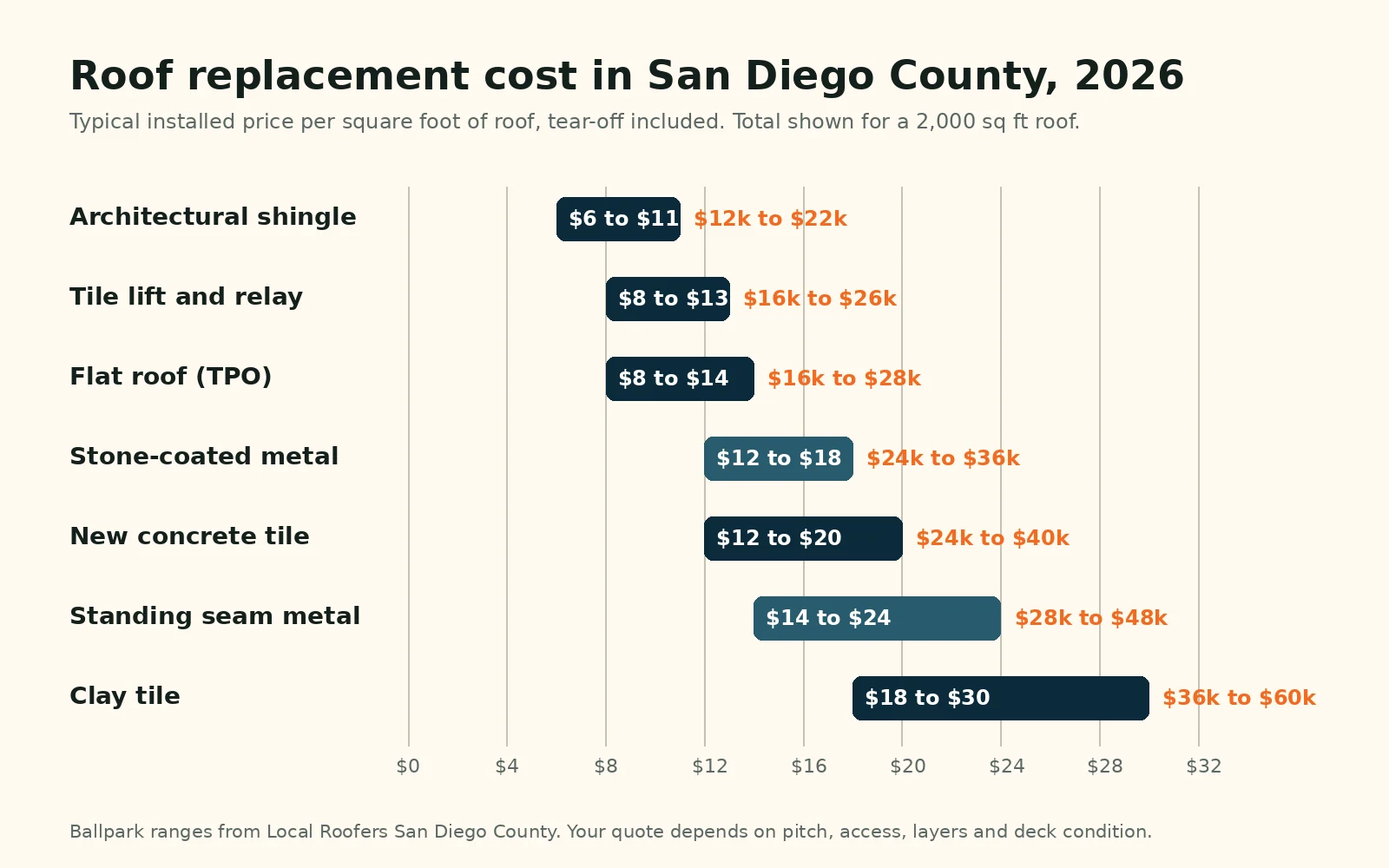
Here’s how the main options stack up. Prices are per square foot of roof area and include tearing off one layer of old roofing, hauling it away, new underlayment, flashing and cleanup.
Architectural asphalt shingles
About $6 to $11 per square foot. This is the most common reroof in the county and the cheapest full replacement. Good architectural shingles hold up 25 years or more in our climate, they’re Class A fire rated, and they come in lighter colors that meet the state’s cool roof rules inland. The low end of the range is a simple one-story ranch with easy access. The high end is a cut-up two-story with lots of valleys and a steep pitch. Our asphalt shingle roofing page covers brands and colors.
Tile lift and relay
About $8 to $13 per square foot. This is where San Diego is different from most of the country. Tons of homes here have concrete or clay tile from the 80s and 90s, and the tile itself is often fine. What’s worn out is the underlayment under it. In a lift and relay we pull the tile, replace the underlayment and battens, swap out any broken pieces and put your tile back. You get a new waterproof roof without paying for new tile. Our tile underlayment guide walks through the job step by step.
New concrete or clay tile
Concrete tile runs about $12 to $20 per square foot. Clay is more like $18 to $30. Tile is heavy, slow to install and needs careful flashing, so labor is a big part of the price. It also lasts a very long time and looks right on Spanish and Mediterranean style homes. If you’re switching from shingles to tile, have someone check whether the framing can carry the weight first. See our tile roofing page for more.
More options
Metal and flat roof prices
$12 to $18 per sq ft
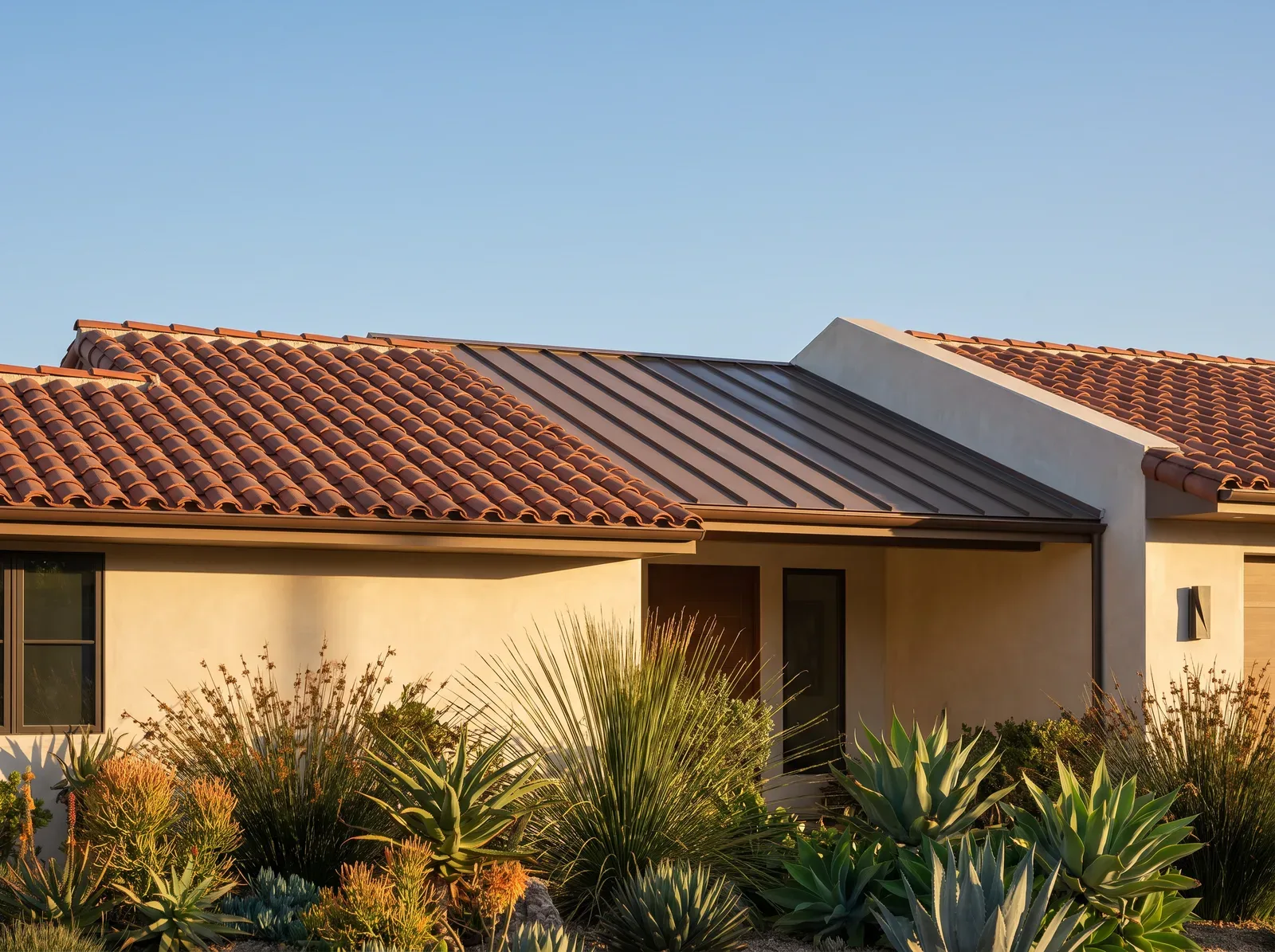
Steel panels with a granule coating made to look like shake or tile. Light, Class A, and good near the coast when the right fasteners are used. A popular way to get the tile look on a house that can’t carry real tile.
Metal roofing$14 to $24 per sq ft
Clean, modern, and built to last 40 years or more. Steel and aluminum prices jumped with tariffs, so this is the material that moved the most since 2024. Near the ocean we usually spec aluminum or a coastal-rated finish.
Standing seam options$8 to $14 per sq ft
For low-slope roofs on mid-century homes, additions, patio roofs and commercial buildings. Price depends a lot on tapered insulation and how many vents, units and drains need flashing.
TPO roofingIf you own a building with a big flat roof, pricing works a little differently once you get into thousands of squares, so talk to our commercial roofing team for a site visit.
2026 prices
Why roofs cost more in 2026
If you got a quote a couple of years ago and you’re getting one again now, expect it to be higher. A few things are behind that.
Material price increases
The big shingle makers raised prices again this year. GAF announced an increase of 6 to 9 percent on shingles and accessories starting June 1, 2026, and PABCO, which makes a lot of the shingles sold in California, announced up to 8 percent on the same date. That follows several rounds of increases over the last few years.
Tariffs on steel and aluminum
Federal tariffs on imported steel and aluminum went up to 50 percent in mid-2025. Every roof has metal in it, even a shingle roof. Drip edge, valley flashing, pipe jacks, vents and nails all cost more now. On a metal roof the effect is much bigger.
Labor and insurance
Good roofing crews are in demand, and workers comp insurance for roofers is some of the most expensive in California. Licensed contractors who carry real coverage have to build that into the price. It’s also why a quote that’s way below everyone else’s should make you a little nervous.
Insurance-driven demand
More homeowners are replacing roofs because their insurance company asked them to. If that’s you, read our guide on roof age and home insurance in California before you sign anything. Sometimes an inspection and repairs are enough.
Your quote
8 things that change your price
Two houses with the same square footage can get very different quotes. These are the reasons we see most often.
- 01
Roof size
Measured in squares of actual roof surface, not the size of your house. Overhangs, porches and garages all count. A steeper roof also has more surface than a flat footprint suggests.
- 02
Pitch
Once a roof gets steep enough that crews can’t walk it safely, they need roof jacks, harness setups and more time. Steep roofs can add 15 to 30 percent to labor.
- 03
How cut up it is
Every valley, hip, dormer, skylight and wall that meets the roof needs flashing and careful cutting. A simple gable roof is cheaper per square than a roof with ten facets.
- 04
Layers to tear off
California allows a second layer of shingles in some cases, but we almost always recommend tearing off to the deck. If there are already two layers, removal and dump fees go up.
- 05
Deck condition
Nobody knows for sure until the old roof is off. Rotted plywood or skip sheathing that needs new plywood over it is the most common change order in San Diego, especially on older homes in North Park, Normal Heights and La Mesa.
- 06
Access
A driveway right next to the house is easy. A canyon lot in Mission Hills, a hillside in Fallbrook or a place where the dumpster has to sit on the street with a permit takes more time and money.
- 07
Where you live in the county
Coastal homes in Oceanside, Carlsbad and Point Loma need corrosion-resistant fasteners and flashing because of salt air. Inland homes in Escondido, El Cajon and Santee are in a climate zone where the state’s cool roof rules apply on most reroofs, which can limit you to lighter colors or rated products.
- 08
Upgrades you add
New gutters, ember-resistant vents, extra attic ventilation, a solar detach and reset, or new skylights all add to the bill. Some are worth it while the roof is open anyway.
On the cool roof point, California’s 2025 energy code took effect January 1, 2026. For sloped roofs in climate zones 4 and 8 through 15, which includes inland San Diego County, reroofing products need to meet a minimum reflectance rating. Plenty of shingle and tile colors already do, so it rarely adds much cost. It mostly rules out the darkest colors. Coastal cities sit in climate zone 7, where that rule doesn’t apply to homes. Details are on the Cool Roof Rating Council’s Title 24 page.
Read the fine print
Costs people miss when budgeting for a new roof
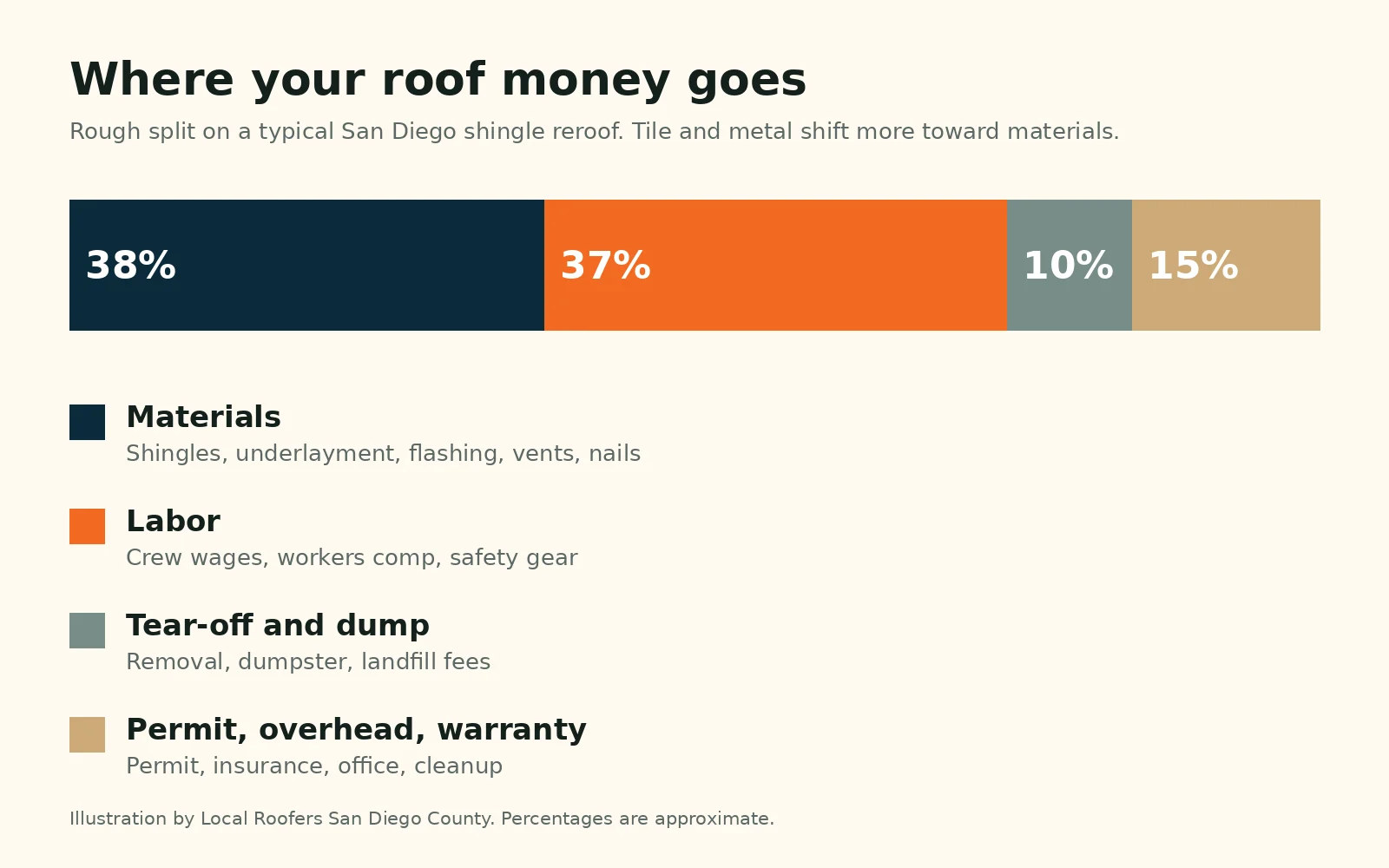
Most of the unhappy roof stories we hear aren’t about the base price. They’re about the extras nobody talked about up front. Ask about each of these before you sign.
Plywood replacementUsually priced per 4×8 sheet. Ask for the per-sheet price in writing so a surprise doesn’t turn into a blank check.
Fascia and rafter tailsExposed rafter tails on older San Diego homes rot at the ends. Repairs are common on Craftsman and mid-century houses.
PermitReroofs need a permit in the City of San Diego and most of the county. Fees are based on job value and usually run a few hundred dollars.
Solar panelsRemoving and reinstalling panels is a separate charge, often by a solar company. Get that quote early.
Gutters and downspoutsOften removed and reset during the job. Old ones may not go back up well.
Skylights and ventsGood time to replace old skylights and swap vents for ember-resistant ones.
Second layer tear-offIf there’s an old layer hiding under the current one, removal costs more.
If you’re in a canyon or brush area, ember-resistant vents and metal valley flashing are worth adding while everything is open. Our Zone 0 and wildfire roof guide covers what’s worth doing. And yes, the permit matters. It’s your proof of the roof’s age for insurance and when you sell. Our roof permit guide explains how it works in the city and the county.
Keep costs down
Ways to save on a roof replacement without cutting corners
There’s no magic coupon for roofs, but these actually help.
- Fix it if it’s fixable. A roof with one bad slope or a few failed flashings may need a $1,500 repair, not a $20,000 roof. A good roofer should tell you when that’s the case.
- Keep your tile. If the tile is in decent shape, a lift and relay saves a lot over new tile.
- Book before the rush. The first big storm of the season fills every roofer’s calendar in San Diego. Late summer and early fall is usually easier to schedule, and you’re not paying for tarps while you wait.
- Do it with other work. If you’re adding solar, painting the house or replacing gutters, line them up. You’ll avoid paying twice for setup and removal.
- Pick the right shingle tier. Top-of-the-line designer shingles look great but cost a lot more. A good architectural shingle is plenty for most homes here.
- Keep up with maintenance. Cleaning valleys and fixing small things every year or two stretches a roof’s life. Our roof maintenance visits are built for that.
What we’d skip: roofing over the old layer to save on tear-off, cheap underlayment on a tile roof, and any contractor who wants most of the money up front. In California, the down payment on a home improvement job generally can’t be more than $1,000 or 10 percent of the contract price, whichever is less. The Contractors State License Board has more on that.

Apples to apples
How to compare roofing quotes
Getting two or three quotes is smart. Just make sure they’re for the same job. A $15,000 quote and a $19,000 quote are often quoting different roofs. Here’s what to line up side by side.
What’s included
Full tear-off to the deck, the brand and product line of shingle or tile, underlayment type, new flashing or reused, drip edge, ridge vent and how many vents. Vague quotes hide gaps.
The extra-cost prices
Per-sheet plywood price, per-foot fascia price and what happens if they find a second layer. These numbers matter more than the total on older homes.
License and warranty
A C-39 roofing license you can look up, workers comp, a written workmanship warranty and the manufacturer’s warranty. Ask who registers the warranty.
Also ask who pulls the permit. If a roofer suggests skipping it to save money, that’s a no from us. It can come back to bite you with your insurer or when you sell the house.
Planning ahead
How we’d plan a roof replacement in San Diego
Most of our reroofs on a regular house take two to five working days once the job starts. Tile takes longer than shingles. Here’s how the whole thing usually goes.
Inspect and price
- Roof and attic inspection with photos.
- Repair or replace recommendation.
- Written quote with extra-cost prices.
Permit and materials
- We pull the permit.
- Materials get ordered and delivered.
- Solar detach scheduled if you have panels.
Install and sign off
- Tear-off, deck repairs, new roof.
- Daily cleanup and magnet sweep for nails.
- Final inspection and warranty paperwork.
Rain on the way? We only open as much roof as we can dry in the same day, and we watch the forecast closely in winter. If you’re dealing with an active leak now, our roof storm damage guide and El Niño roof prep guide cover what to do first.
Around the county
Roof replacement across San Diego County
We replace roofs all over the county, and the jobs look different by area. Lots of tile lift and relays in Escondido, Rancho Bernardo and San Marcos. Shingle reroofs on 60s and 70s ranch homes in Chula Vista and Clairemont. Coastal metal and shingle jobs in Oceanside and Carlsbad where we upgrade every fastener for salt air.
See our local pages for roofing in Escondido, Carlsbad, Oceanside and Chula Vista.
Common questions
Roof replacement cost FAQs
How much does a new roof cost in San Diego in 2026?
For a typical home with about 2,000 square feet of roof, a shingle replacement usually runs $12,000 to $22,000. New concrete tile is often $24,000 to $40,000, and clay tile or standing seam metal can go higher. Your price depends on size, pitch, access and deck condition.
What is a roofing square?
A square is 100 square feet of roof surface. Roofers measure and price by the square. A roof with 2,000 square feet of surface is 20 squares.
Is a tile lift and relay cheaper than a new roof?
Usually, yes. If your tile is still in good shape, replacing only the underlayment and reusing the tile typically costs much less than new tile and gives you a new waterproof layer. Broken or discontinued tiles get replaced as needed.
Do I need a permit to replace my roof in San Diego?
Yes. The City of San Diego and most cities in the county require a permit for a reroof. Your roofer should pull it, and the fee is usually a few hundred dollars depending on job value. Keep the final sign-off for your insurance and when you sell.
Will homeowners insurance pay for a new roof?
Insurance pays for sudden damage from a covered event, like a storm or a fallen tree. It doesn’t pay to replace a roof just because it’s old or worn out. If your roof was damaged, document it and call your insurer before making permanent repairs.
How long does a roof replacement take?
Most homes take two to five working days once work starts. Tile and complex roofs take longer. Add time beforehand for the permit and materials, and for scheduling a solar detach if you have panels.
Free roof estimate
Want a real number for your roof?
We’ll get on the roof, check the attic and give you a written quote with photos. If repairs will buy you more years, we’ll tell you that instead.