
After the wind and rain
Roof Storm Damage: What San Diego Property Owners Should Do Next
A practical guide to spotting roof damage, protecting the building, documenting the loss, and deciding whether the right next step is inspection, repair, or replacement.
Request a roof inspectionStart with the condition
Roof storm damage is not always a missing piece of roofing.
Roof storm damage is a new opening, displacement, impact, or water-entry condition caused by wind, rain, hail, or windblown debris. The first visible clue may be outside, in the attic, or on a ceiling several rooms away from the actual entry point.
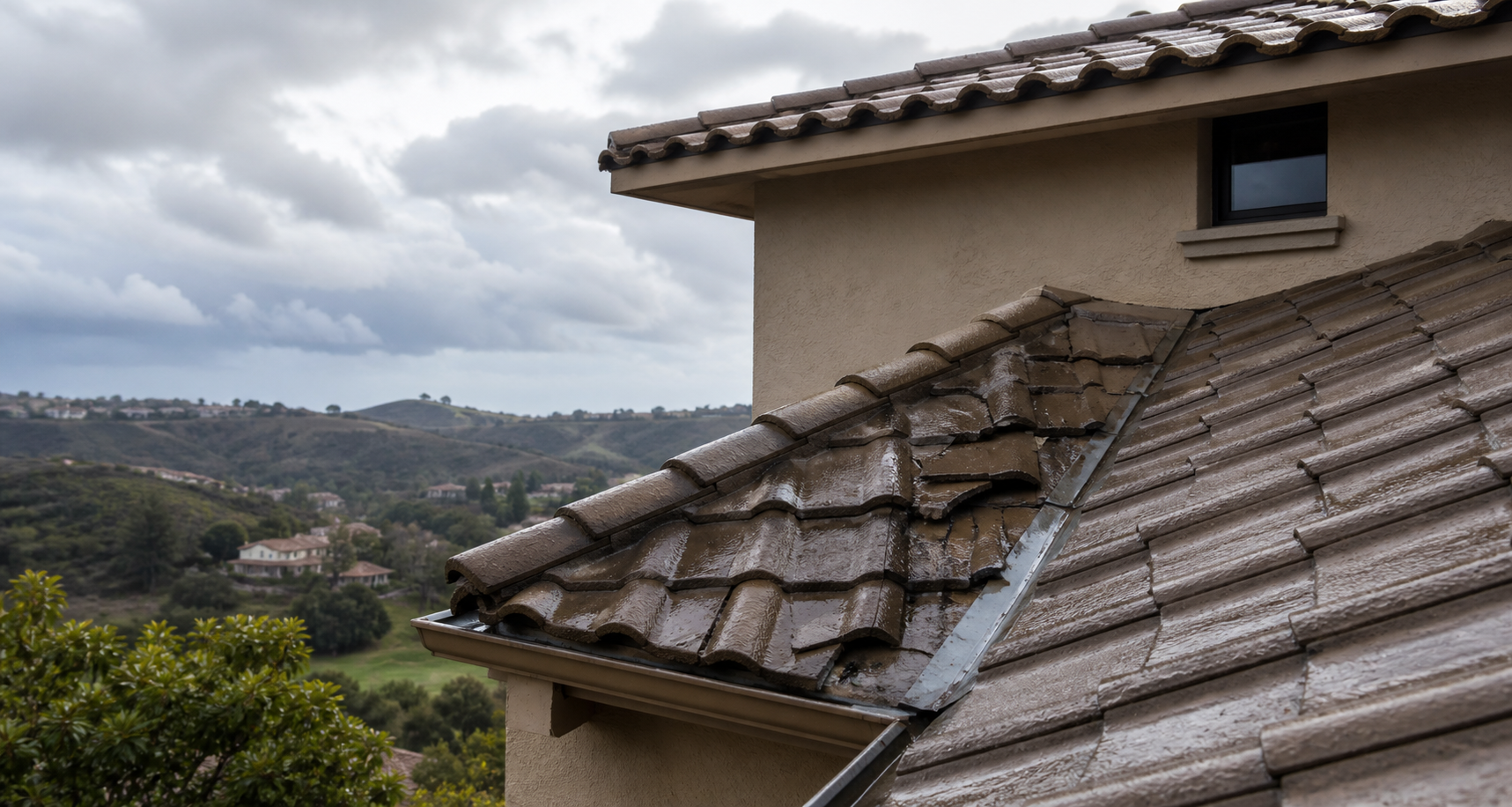
San Diego does not need a hurricane to produce roof damage. Strong onshore winds can lift shingles and edge metal. Santa Ana winds can move concrete or clay tiles that were already loose or poorly secured. A concentrated downpour can expose a failed transition around a chimney, vent, skylight, wall, or roof valley. Falling branches and windblown objects can crack tile, puncture a low-slope membrane, or deform metal components.
The important distinction is between the weather event and the failure it reveals. Rain does not have to tear a roof apart to cause a serious interior problem. Water follows laps, fasteners, underlayment, deck joints, rafters, conduit, and wall cavities. The stain you see may be some distance from the opening. On tile roofs, the surface tile sheds most of the water, but the underlayment and flashing details below are part of the water-management system. A few displaced tiles can expose those less visible layers to ultraviolet light and wind-driven rain.
Age-related wear and storm damage can exist at the same time. A sound inspection documents the observed condition and likely path of water without promising that every defect is covered by insurance. Coverage depends on the cause of loss, policy language, exclusions, deductible, and the insurer’s investigation. The roofing decision should still begin with the physical facts.
Outside, inside, and below
Signs of roof damage after wind or heavy rain.
Do not rely on a street view alone. Some damage is obvious from the yard; some becomes visible only where water has reached the attic or interior finishes.
Missing, lifted, or broken material
Look for gaps in shingles, folded tabs, displaced ridge pieces, cracked tiles, or roofing fragments on the ground. Do not climb up to reposition them yourself.
Loose metal and open transitions
Bent edge metal, separated flashing, lifted counterflashing, or damage around vents and skylights can create direct water paths.
Overflow, debris, and slow discharge
Watch gutters, downspouts, scuppers, and visible drains during safe conditions. Overflow may point to blockage, displacement, or inadequate flow.
New stains, dampness, or bulging finishes
Fresh rings on ceilings, peeling paint, damp drywall, or a musty odor after rain deserves prompt attention, even if the surface later dries.
Wet insulation or dark roof decking
From a safe attic walkway, look for damp insulation, moisture at penetrations, darkened sheathing, or daylight through an unintended opening.
A changed or sagging roofline
A visible change in plane, displaced framing, or a ceiling that is holding water is urgent. Keep people away from the area and call a professional.
Damage can be subtle
Wind damage often starts at an edge or weak detail.
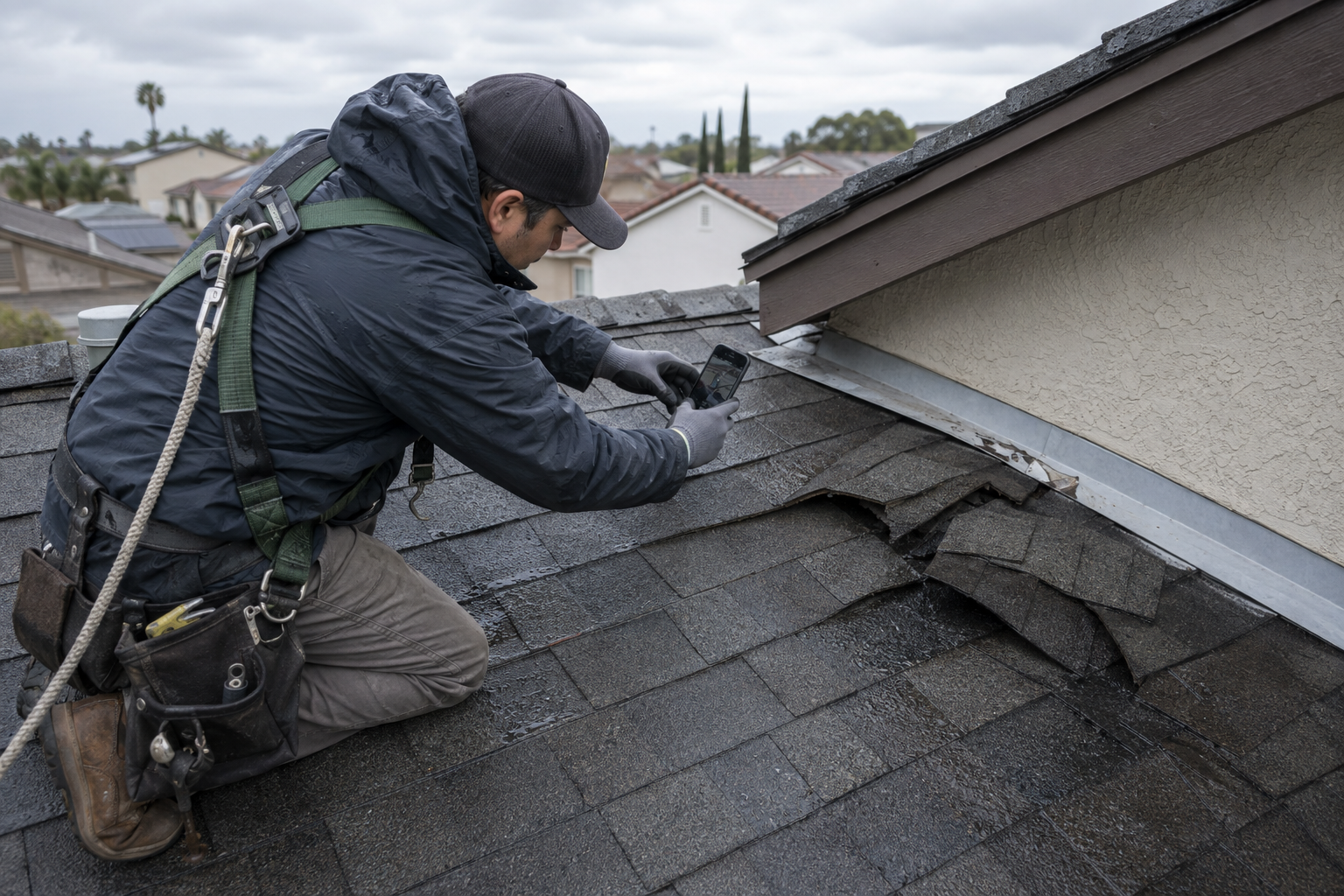
Wind pressure is not uniform across a roof. Corners, eaves, ridges, rakes, wall transitions, and already-loose materials can receive different forces than the open field. A shingle may remain in place after its seal is disturbed. A tile may shift without falling. Edge metal can deform just enough to loosen a termination.
That is why a storm damage roof inspection should cover the whole accessible system, not only the area above a stain. The inspector should review roof covering, ridges and hips, valleys, perimeter edges, flashings, penetrations, drainage, visible deck condition, and interior evidence where access is available.
- Wide photos that establish each roof plane
- Close photos of damage and nearby reference areas
- Notes tying the condition to a specific location
- A repair scope that addresses the water path, not just the stain
For asphalt shingles, random granules in a gutter are not proof of storm damage by themselves; ordinary aging also sheds granules. Creases, displaced tabs, fresh exposed asphalt, impact marks, and collateral damage need to be evaluated together. The same discipline applies to tile, metal, and membrane roofs.
A measured response
What to do after a storm damages your roof.
Act promptly, but do not let urgency push you onto a wet roof or into an undocumented permanent repair.
Protect people first
Stay away from downed lines, unstable trees, standing water near electrical equipment, bulging ceilings, and visibly compromised roof areas. Move belongings only when it is safe.
Photograph the condition
Capture exterior debris, visible roof changes, wet materials, ceiling stains, damaged contents, and temporary protection. Note the storm date and when each symptom appeared.
Use temporary protection
Place containers under safe, minor drips and protect contents. A qualified contractor can install emergency dry-in or a tarp when roof access and attachment are hazardous.
Define the repair scope
Arrange an inspection, report a potential claim promptly if appropriate, preserve receipts, and avoid extensive permanent repairs before the insurer has had a chance to evaluate the loss.
System-specific clues
What storm damage looks like on different roofs.
Clay or concrete tile
Look for cracked, slipped, missing, or displaced field and ridge tiles, impact points, debris-filled valleys, and exposed underlayment. Walking on tile can break otherwise serviceable pieces, so inspection requires the right access method.
Asphalt shingles
Wind can lift tabs, break seals, crease shingles, remove pieces, or disturb ridge caps. Hail or debris may bruise the mat or dislodge granules. Age, heat, installation, and prior wear must be separated from event-related damage.
Metal roofing
Review panel seams, clips and fasteners, ridge and edge details, sealant joints, flashings, and visible dents or punctures. Cosmetic marking is different from a condition that affects water shedding or attachment.
Membrane and built-up roofs
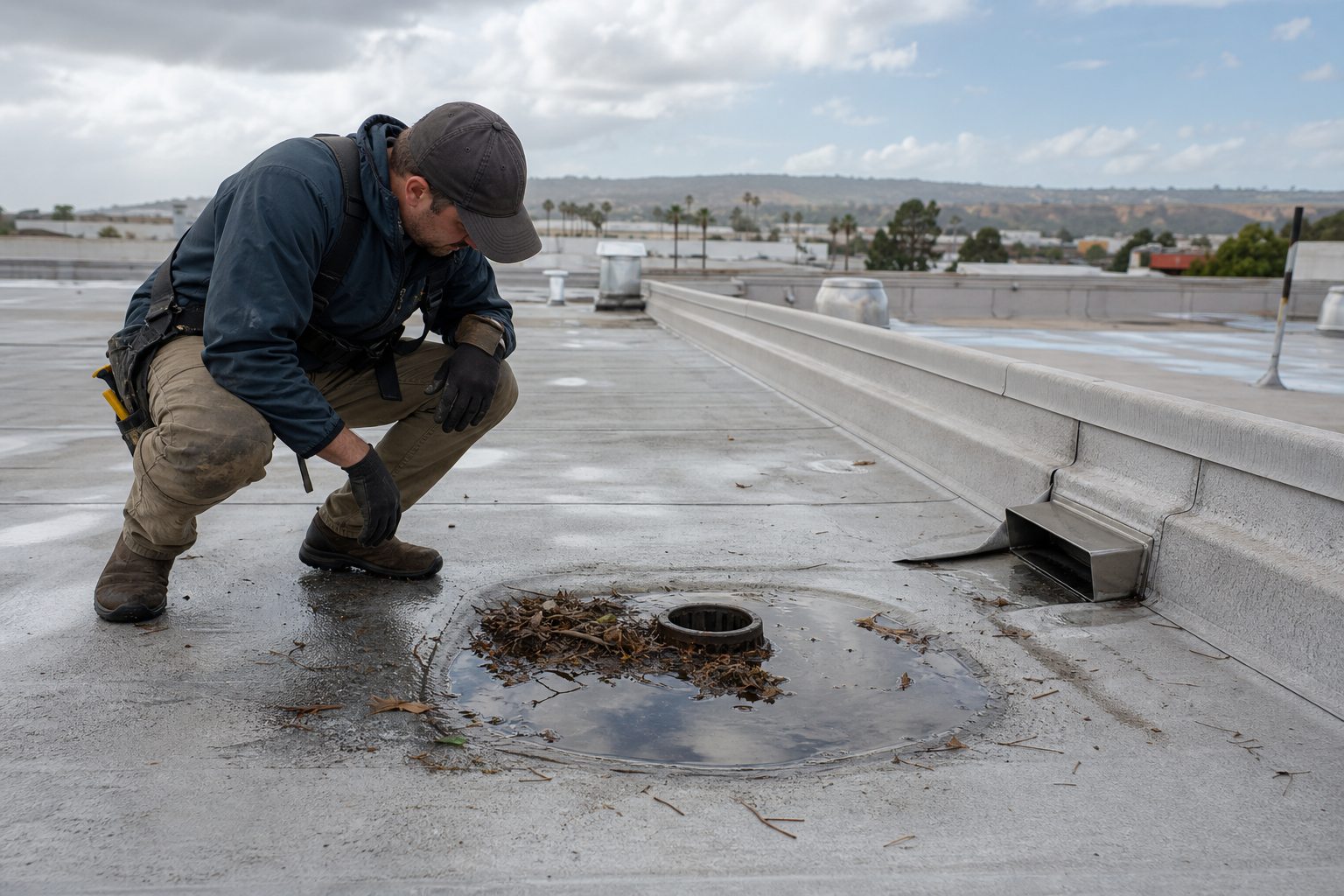
Check for punctures, displaced edge metal, open laps or terminations, damaged flashings, clogged drains, displaced equipment covers, and new ponding patterns. Foot traffic after a storm can add damage.
San Diego property owners can learn more about planned roof maintenance, local roofing services, and commercial roof systems before deciding on a repair or replacement scope.
Commercial properties
Low-slope roof damage can interrupt more than the roof.
On a commercial building, the response has to account for occupants, equipment, inventory, tenant operations, and safe access. Water may enter near a drain or curb, travel along steel deck flutes, and appear far from the failed detail. A roof plan and marked interior leak locations can make the investigation more efficient.
After heavy rain, document how long water remains, but do not assume every shallow puddle proves failure. Drainage should be evaluated in context: roof slope, drain and overflow locations, debris, deflection, previous repairs, and the membrane manufacturer’s requirements. A blocked drain is a maintenance issue; a displaced scupper, punctured membrane, or open flashing may be direct storm damage. More than one condition can be present.
Property managers should also record who accessed the roof before and after the event. HVAC panels, loose service materials, tree limbs, and windblown debris can damage membranes. Temporary work should protect the building while preserving enough information for a permanent, compatible repair.
Insurance + repair records
Document first. Let the evidence do the talking.
Contact your insurer or agent promptly if the loss may be covered. Give a factual account: the date of the weather event, when the damage was discovered, what areas are affected, and what temporary measures were taken. Avoid guessing about the cause or promising a repair method before the roof has been inspected.
The California Department of Insurance advises property owners to take reasonable steps to protect property from further damage, save receipts for those costs, and avoid extensive permanent repairs before the adjuster has assessed the loss. Your specific coverage is controlled by your policy and the insurer’s claim decision—not by a roofer’s assurance that a claim “will be covered.”
Before hiring anyone, verify the contractor’s current California license status and compare the proposed scope, materials, exclusions, and payment schedule. Storms attract door-to-door offers and high-pressure sales. A credible contractor should be willing to put the findings and proposed work in writing.
Helpful sources: California Department of Insurance residential claims guide · CSLB contractor-hiring guidance · National Weather Service San Diego · GAF storm-damage guide
Repair or replace?
The size of the visible damage does not make the decision by itself.
A localized, compatible repair may be appropriate when the damaged area is limited and the surrounding roof still has useful service life. Replacement becomes more likely when damage is widespread, matching materials are unavailable, the substrate is compromised, or the roof already has broad deterioration.
A repair scope should identify what will be removed, what concealed materials will be evaluated after opening, how new work will tie into the existing system, and what happens if wet or damaged decking is found. On tile roofs, usable field tiles may sometimes be carefully set aside while the underlayment and flashing below are repaired. On shingles, a technically possible patch may still be visually conspicuous because new material will not match years of weathering.
Insurance scope and construction scope are related, but they are not identical. The insurer evaluates coverage and the amount payable under the policy. The contractor evaluates how to complete code-compliant, manufacturer-compatible work. If those scopes differ, ask each party to explain the measurements, photos, product constraints, and line items behind the conclusion.
Be cautious with any inspection that jumps from one loose tile or ceiling mark directly to a full replacement. Be equally cautious with a surface patch that does not investigate a recurring leak. The responsible recommendation is the one supported by the roof’s condition.
Straight answers
Roof storm damage FAQs.
How can I tell if my roof has storm damage?
From a safe location, look for missing or displaced roofing, cracked tiles, lifted shingles, bent flashing, fallen material, gutter overflow, new ceiling stains, damp attic insulation, or a changed roofline. None of these clues establishes the full cause or scope on its own, so arrange a professional inspection when you find a new condition after a storm.
Should I climb onto my roof after a storm?
No. Wet roofing, loose materials, unstable branches, hidden openings, and electrical hazards make post-storm roof access especially dangerous. You can photograph visible conditions from the ground and check accessible interior areas without stepping onto the roof.
Does homeowners insurance cover roof storm damage?
It may cover sudden damage caused by a covered event such as wind or a falling tree, but policies, exclusions, deductibles, roof-payment provisions, and facts differ. Flood is commonly treated differently from wind-driven rain entering through storm-created damage. Review your policy and ask your insurer or agent for a coverage determination.
How soon should roof damage be inspected?
Arrange an inspection as soon as it is safe, especially when there is active water entry, missing material, structural movement, or damage above occupied space. Prompt documentation also helps distinguish a recent condition from later deterioration.
Can storm-damaged roofing be repaired, or does it need replacement?
Both are possible. Limited damage on a serviceable roof may support a focused repair. Widespread wind damage, extensive substrate damage, brittle surrounding material, repeated leaks, or product-compatibility problems can make replacement more practical. The decision should follow a documented inspection.
What should a storm damage roof inspection include?
It should review accessible roof coverings, edges, ridges, valleys, flashings, penetrations, drainage, rooftop equipment, and visible substrate conditions. Interior or attic evidence should be mapped when access is available. Useful reporting includes overview and close-up photos, locations, observed conditions, and a defined repair recommendation.
Start with a documented inspection
Find the damage. Define the right repair.
Tell us what changed during the storm, where water appeared, and what type of roof protects the property. We will help you plan the next practical step for roof damage in San Diego County.