
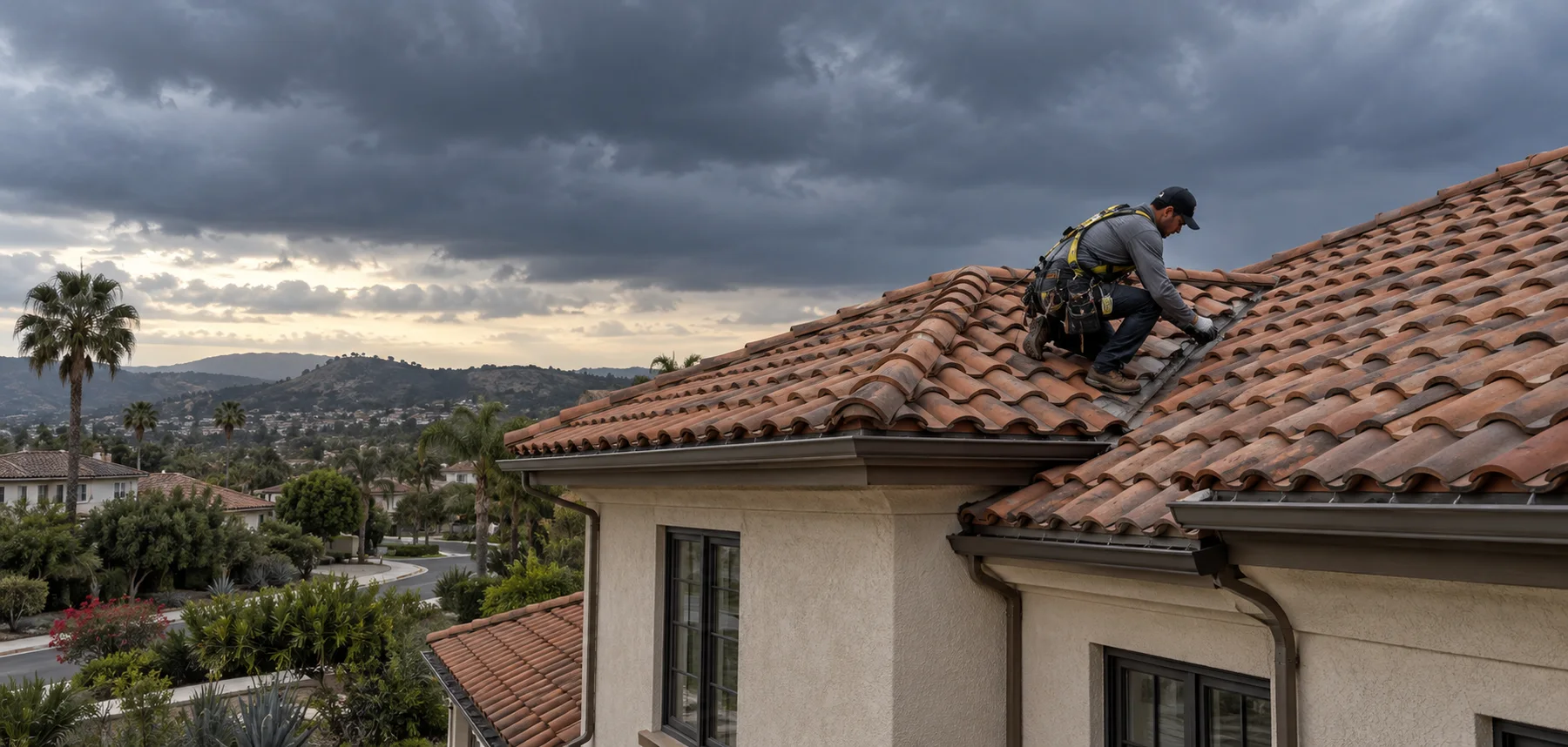
2026–27 rainy-season guide
El Niño roof preparation for San Diego
NOAA expects a very strong El Niño this fall and winter. Here is what that forecast means—and what to check before the first hard rain finds a weak spot.
San Diego homeowners have a real reason to prepare for rain this year, but not a reason to panic. On September 10, 2026, NOAA’s Climate Prediction Center said El Niño was strengthening and placed the chance of a very strong event during fall and winter 2026–27 above 90%. Its seasonal outlook also favors above-normal precipitation across the southern half of California.
That does not predict the amount of rain at your address or guarantee roof damage. It means the odds have shifted enough that a dry-weather roof inspection is sensible—especially if the roof has a repair history, visible wear, uncertain drainage, or a leak that was never fully traced.
What the forecast means for a roof
Rain usually exposes an existing weakness.
A storm does not need to tear roofing material away to cause trouble. Wind-driven rain can reach a vulnerable flashing detail. Water can back up where leaves or roofing debris restrict a valley, gutter, scupper or drain. A cracked tile can leave aged underlayment with more work to do. On a low-slope roof, a slow drain can turn ordinary runoff into standing water.
San Diego’s long dry stretches can hide these conditions. Sealant ages in the sun, debris stays put, and an old repair can look acceptable until water arrives from a different direction. The goal of pre-storm work is not to “El Niño-proof” a roof. It is to find manageable defects while access is safer and repair decisions are not being made under an active leak.
San Diego roof-prep checklist
Seven places worth checking before the rain.
Start with observations from the ground and from inside the building. Do not walk a tile, steep, wet or unfamiliar roof. A qualified roofer can evaluate roof-level details without turning an inspection into new damage.
- 01
Roof surface
Look for slipped or cracked tiles, lifted shingle edges, loose metal, membrane openings, or material in the yard. Binoculars can help with a safe ground-level view.
- 02
Flashings and penetrations
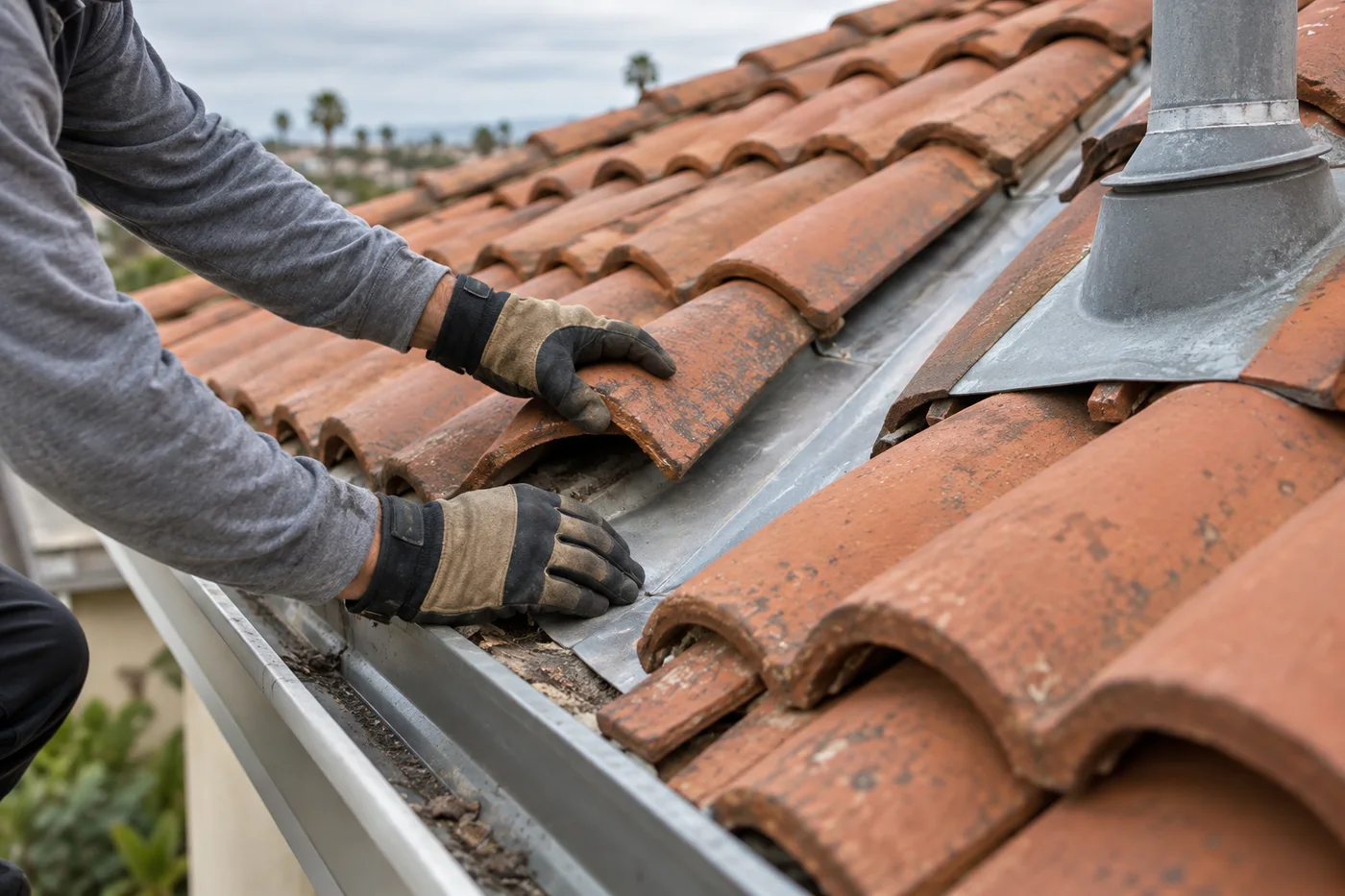
Vents, skylights, chimneys, walls and equipment curbs interrupt the roof surface. Ask the inspector to photograph separated metal, open laps, failed sealant and prior patching.
- 03
Valleys and drainage paths
Water needs a clear route off the roof. Leaves and fragments in valleys can slow runoff before it ever reaches the gutter.
- 04
Gutters, downspouts and discharge
Clear blockages and confirm downspouts discharge where water can move away from the structure. The National Weather Service includes securing loose gutters among its high-wind preparation advice.
- 05
Roof edges and nearby trees
Check for loose edge metal, deteriorated fascia and branches that could scrape or fall onto the roof. Use an appropriate tree professional around large limbs and utility lines.
- 06
Attic and ceilings
Record existing stains, damp odors, peeling finishes and daylight visible through unintended openings. Old stains should be dated or lightly outlined so new moisture is easier to identify.
- 07
Past repairs and records
Gather invoices, warranties and photos. Tell the inspector where leaks appeared and under what wind or rain conditions; the interior drip may be some distance from the entry point.
If this review finds damage rather than routine upkeep, use our roof storm damage guide to plan safe next steps and documentation.
Roof-specific priorities
The same storm tests different roofs in different ways.
Clay and concrete tile
Check for slipped, cracked or missing tiles and debris trapped in valleys. The visible tile sheds water, but underlayment and flashing provide essential protection below. A clean-looking tile field does not reveal the condition underneath.
Explore tile roofingAsphalt shingles
Look for lifted tabs, missing pieces, exposed fasteners, concentrated granules at downspouts and damaged edge details. Granule loss alone is not a diagnosis; location, extent and roof age matter.
Explore asphalt shinglesFlat and commercial roofs
Clear drains and scuppers, then review seams, penetrations, perimeter details and signs of prior ponding. Facility teams should also confirm that recent HVAC, solar or tenant work did not leave a new opening.
Explore commercial roofingA safer storm plan
What to do before, during and after heavy rain.
Inspect and document
- Schedule roof-level work in dry weather.
- Clear drainage and secure loose exterior items.
- Photograph ceilings and known trouble spots.
- Save the roofer, insurer and utility numbers.
- Turn on local weather alerts.
Protect people first
- Do not climb onto the roof or a ladder.
- Move belongings away from an interior drip.
- Use a container only if the area is electrically safe.
- Stay clear of sagging ceilings and standing water.
- Follow NWS and local emergency guidance.
Record what changed
- Photograph damage from a safe location.
- Note when and where water appeared.
- Arrange a professional inspection.
- Avoid door-to-door pressure and verify licenses.
- Keep estimates, invoices and mitigation records.
Roof safety: A temporary tarp is still roof work. Wet surfaces, broken tile and wind make access more hazardous. Keep people off the roof and use a qualified, properly equipped contractor.
Repair now or monitor?
Call before the storm if you see these warning signs.
Active or recurring leakEspecially one that has returned after a prior repair.
Displaced roofingMissing shingles, slipped tiles, loose panels or exposed underlayment.
Drainage failureOverflowing gutters, blocked scuppers, ponding evidence or damaged downspouts.
Interior movementSagging drywall, a spreading stain, damp insulation or a musty odor near the roofline.
Storm or impact damageA fallen branch, windblown debris, damaged solar attachments or other new impact.
Not every warning sign means the roof needs replacement. Ask for photographs, a defined repair area, the cause being addressed, materials to be used and what remains outside the scope. For preventive service, see our San Diego County roof maintenance page. Before hiring, verify the business through the California Contractors State License Board.
Straight answers
El Niño roof-preparation FAQs.
Will El Niño definitely bring heavy rain to San Diego?
No. NOAA’s September 2026 outlook favors a very strong El Niño and above-normal seasonal precipitation in Southern California, but it does not predict rainfall totals for one property or guarantee that every storm will be severe. Follow short-range NWS forecasts as each weather system approaches.
When should I schedule a pre-rain roof inspection?
Before a storm enters the short-range forecast. Dry-weather scheduling gives the contractor safer access and gives you time to compare a defined repair scope. Earlier attention is warranted if the roof has an active leak, displaced material or a recurring drainage problem.
Can I inspect my roof myself?
You can look from the ground and check accessible interior areas. Avoid walking the roof. Tile can break underfoot, wet roofing is slippery, and an untrained inspection can miss flashing or drainage details. Use a qualified professional for roof-level evaluation.
Should I replace an older roof just because El Niño is forecast?
No. Age is context, not a diagnosis. A replacement recommendation should be tied to current condition, repair history, the extent of deterioration and whether a durable repair is practical. Ask the contractor to show the findings behind the scope.
What should I do if the roof starts leaking during a storm?
Keep people away from electrical hazards, standing water and sagging ceilings. Protect belongings if it is safe, document the leak from indoors and call for professional help. Do not go onto a wet roof or attempt an improvised tarp in wind or rain.
Does homeowners insurance cover roof leaks from rain?
Coverage depends on the policy, the cause of loss and the roof’s condition. Sudden storm damage may be treated differently from wear, deterioration or maintenance issues. Document what happened and contact your insurer for guidance specific to your policy.
Prepare while the roof is dry
Find the weak spot before the rain does.
Tell us about the roof, its repair history and any signs you have noticed. We will help you choose the next practical step.