
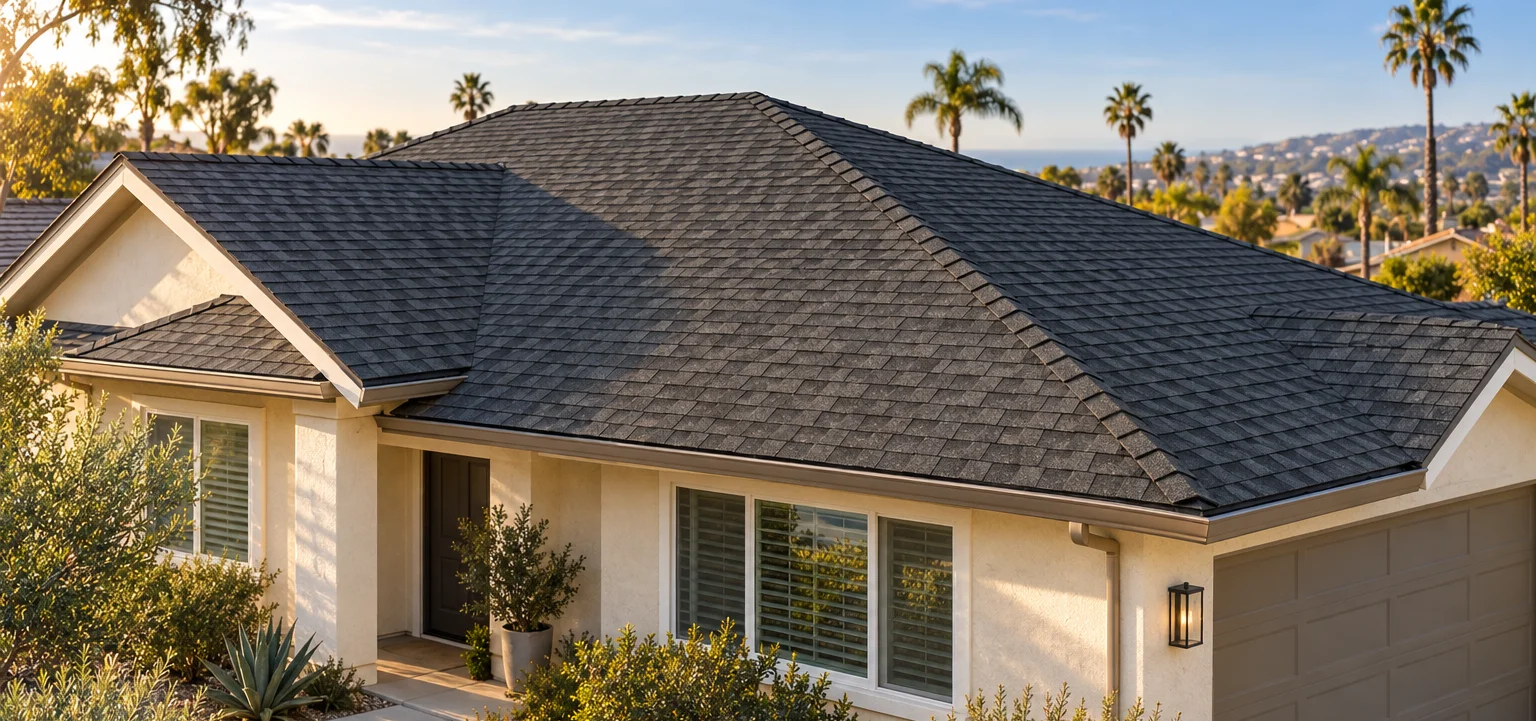
2026 homeowner insurance guide
Roof age and home insurance in California
Insurers are looking hard at roofs right now, sometimes from a plane. Here’s how roof age affects your policy in San Diego County, and what to do if a non-renewal letter shows up.
A few years ago, nobody asked about your roof when you renewed your homeowners policy. Now it’s one of the first things that comes up. We get calls every week from San Diego homeowners holding a letter that says their roof is too old, or “showing wear,” and their renewal date is coming up fast.
California’s insurance market has been tight since the big carriers started pulling back in 2023. When insurers get picky, they look for easy reasons to drop a policy or pay less on a claim. An older roof is one of the easiest. It’s something they can see from the sky without ever sending anyone to your house.
We’re roofers, not insurance agents, so we won’t tell you what your policy says. What we can tell you is how long roofs really last around here, what insurers are looking at, and how to get the right paperwork in front of them. That last part saves a lot of people from replacing a roof that still had years left in it.
Why it matters
Why insurers care so much about roof age
From an insurer’s point of view, the roof is the part of the house most likely to cause a claim. Leaks, wind damage, water in the attic, ceiling stains. An old roof means more of those. It also burns differently in a wildfire, depending on what it’s made of and what shape it’s in.
So they use roof age as a shortcut. A lot of carriers set a number, usually somewhere between 15 and 25 years, and anything past that gets extra attention. There’s no single statewide rule. Each company has its own guidelines, and they change them without much warning.
What can happen when your roof is “too old”
It’s not always a flat no. Depending on the company, an older roof can lead to:
- A non-renewal. In California, an insurer generally has to give you at least 75 days’ notice before it non-renews a homeowners policy.
- A request for an inspection or repairs before they’ll renew.
- Actual cash value coverage on the roof. That means a claim pays what the old roof was worth after depreciation, not what a new one costs. On a 20-year-old shingle roof, that gap can be most of the bill.
- A higher premium or a bigger deductible.
- Trouble getting a new policy if you’re shopping around.
Insurance industry reports have noted that some big carriers, Farmers among them, may only offer actual cash value on asphalt roofs older than about 15 years. The FAIR Plan has its own rule. Its guidelines say a home built more than 25 years ago generally only gets replacement cost coverage if the roof has been updated within the last 25 years.
Roof lifespan
How long roofs really last in San Diego County
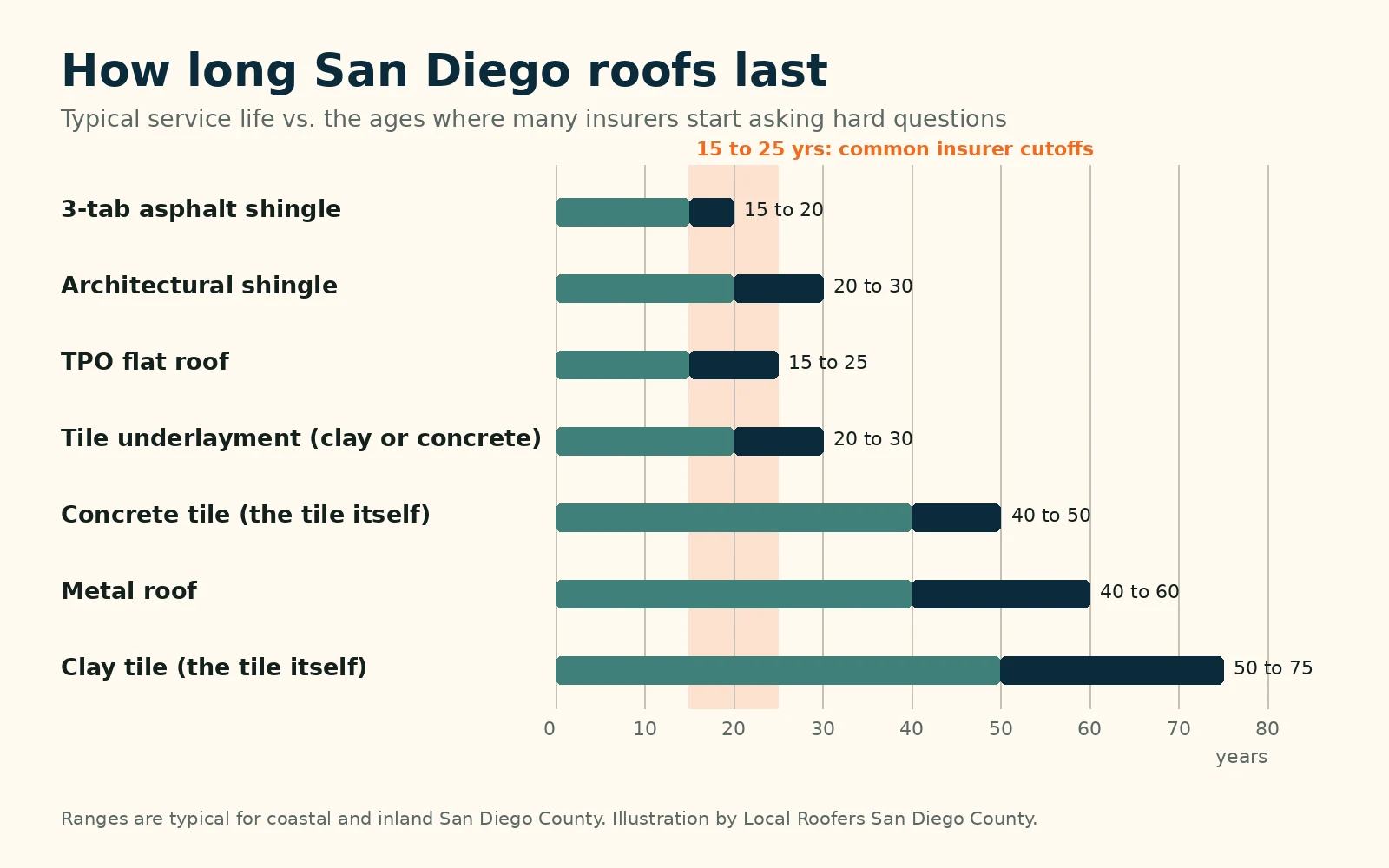
Our weather is easy on roofs compared to most of the country. No snow loads, no hail to speak of, not many freeze and thaw cycles. What wears roofs out here is sun, heat and, near the coast, salt air. Inland roofs in Escondido, El Cajon and Santee bake all summer. Coastal roofs in Oceanside, Carlsbad and Point Loma deal with marine layer moisture and rusting fasteners.
The tile roof problem
This is the one that trips up a lot of San Diego homeowners. Clay and concrete tile can last 50 years or more. But tile isn’t really what keeps water out. The underlayment under the tile does that, and it usually lasts 20 to 30 years. So a 35-year-old tile roof might look fine from the street and still have paper underneath that’s falling apart.
Insurers don’t always know the difference. Some see “tile” and don’t worry. Others see “1989” on the property record and flag it. If you had the underlayment redone with a lift and relay, where we take the tile off, replace what’s under it and put the same tile back, keep that permit and invoice. It’s a real roof update, and it’s worth asking your agent how they count it. Our tile underlayment guide explains how that job works.
Shingle roofs hit the cutoff first
A good architectural shingle roof in San Diego can last 25 years or more. Older 3-tab shingles usually don’t. Either way, shingle roofs are the ones most likely to get flagged once they pass 15 or 20 years, even if they’re holding up fine. If you’re in that spot, a documented inspection matters a lot more than the calendar does.
Eye in the sky
Your insurer may be looking at your roof from a plane
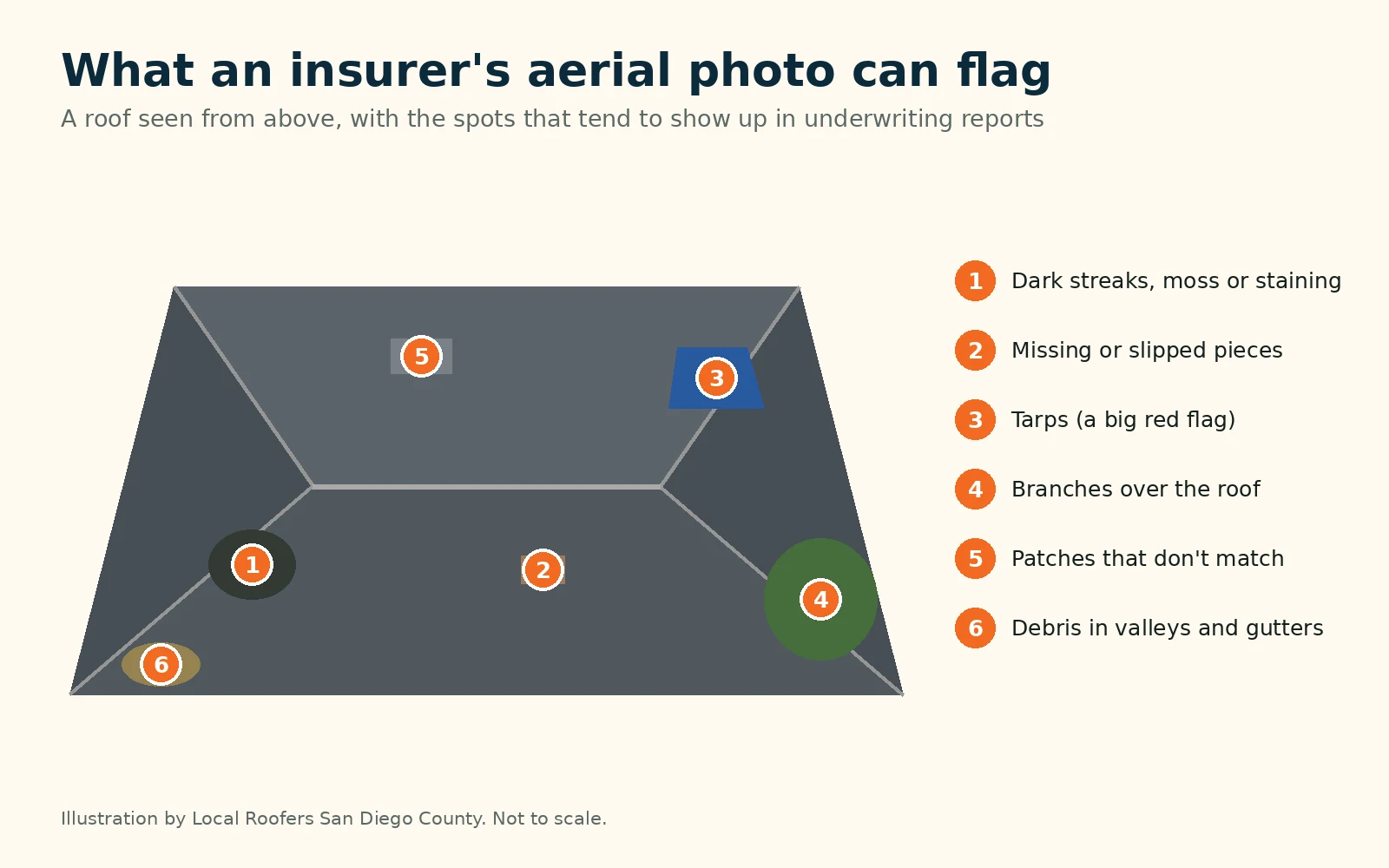
Plenty of insurers now buy aerial and satellite images of homes, and some run them through software that scores roof condition. Nobody knocks on your door. You just get a letter.
The problem is that a photo from a few thousand feet up can’t tell a stain from a hole. Dark streaks from algae, shadows from a tree, a different color patch from an old repair, a bit of leaf debris in a valley. All of it can read as “roof in poor condition.” There have been reported cases in California where an insurer dropped a policy based on aerial images, the homeowner paid for an independent inspection that said the roof had years left, and the insurer still didn’t change its mind.
Things you can fix before the next photo
You can’t control when the plane flies over. You can control what it sees.
- Get leaves, needles and palm fronds out of the valleys and gutters.
- Trim back branches hanging over the roof.
- Replace any missing or slipped shingles or tiles.
- Take off old tarps. If a tarp is still up, the leak under it needs a real fix.
- Clean off heavy algae or moss streaks the right way. No pressure washer, please. It strips shingle granules and cracks tile.
A lot of that is regular upkeep. Our roof maintenance visits cover debris cleanup and small repairs, and we take dated photos you can keep on file.
Non-renewal letter
7 steps if your insurer flags your roof
Don’t panic, and don’t sign a contract with the first roofer who knocks on your door. You usually have more time and more options than the letter makes it sound.
- 01
Read the letter closely
Is it a non-renewal, a request for repairs, or a change to how the roof is covered? Note the deadline. Look for the reason they gave and whether they mention a photo or an inspection.
- 02
Ask for the photos
Call your agent or the insurer and ask for the images and the report they used. Even without AB 75 on the books, a lot of companies will share them if you ask. You can’t argue with a photo you’ve never seen.
- 03
Find your roof’s real age
Dig up permits, invoices and old inspection reports. If you don’t have them, your city or the county can usually look up permit history by address. A roof that’s 12 years old but listed as 30 on some database is a quick fix once you can prove it.
- 04
Get a professional roof inspection
Have a licensed roofer go up and document the roof with photos, measurements of any damage, and an honest estimate of how much life it has left. We cover what a good report includes in the next section.
- 05
Fix what’s actually wrong
If the inspection finds real problems, get them repaired and documented. Lots of flagged roofs need a few hundred to a couple thousand dollars of work, not a whole new roof.
- 06
Send it all back in writing
Email or mail the report, the before and after photos, the invoice and any permit to your insurer before the deadline. Ask them to reconsider, and keep a copy of everything you send.
- 07
Shop around if they won’t budge
Talk to an independent agent who can quote several companies. The same paperwork helps you get a new policy. If you’re stuck, the California Department of Insurance takes complaints and has a consumer hotline.
Heads up on storm chasers. After a wave of non-renewals, we see crews going door to door promising the insurance company will pay for a new roof. A non-renewal isn’t a claim, and nobody pays for a roof just because it’s old. Check any contractor’s license with the Contractors State License Board before you sign anything.
Roof inspection report
What a good roof report for your insurer includes
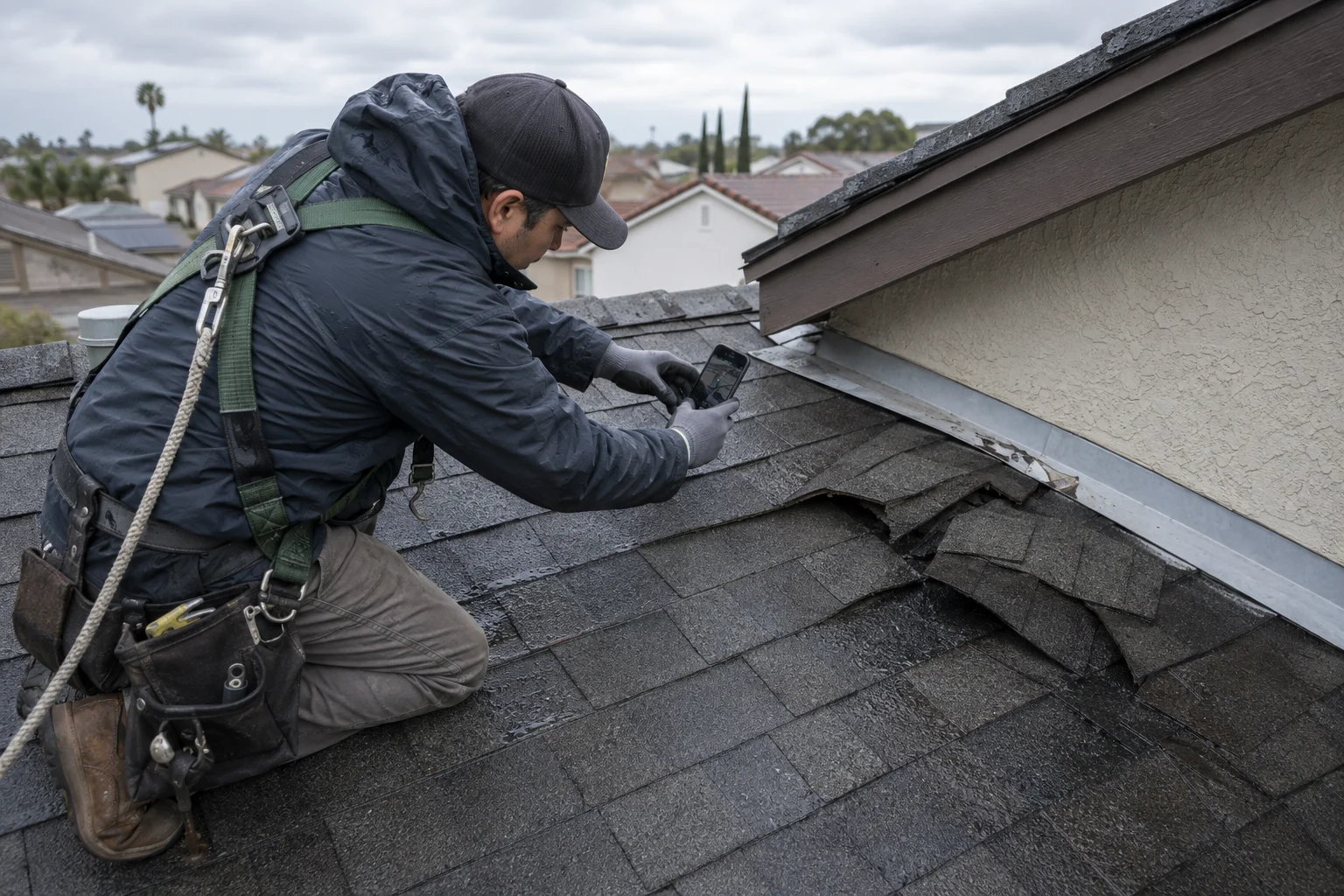
Some companies call it a roof certification, some call it a roof condition report. Whatever the name, the point is the same. It’s a dated document from a licensed roofer that says what the roof is, how old it is, what shape it’s in and how long it should last. Insurers take it a lot more seriously than a homeowner saying “it doesn’t leak.”
The facts about your roof
Roof type and material, approximate install date, number of layers, square footage, slope and the contractor’s license number. For tile, it should say when the underlayment was last replaced if that’s known.
What we found, with photos
Photos of every slope, the valleys, flashing, vents, penetrations and gutters, plus the attic if we can get in. Any damage gets its own photo and a note on whether it’s cosmetic or a real problem.
An honest number
An estimate of remaining useful life, in years. If repairs are needed first, the report should say which ones and then confirm when they’re done, with after photos.
A few things to watch for. The report has to be honest. If your roof is shot, no roofer should sign something saying it has ten years left, and an insurer will figure that out at claim time anyway. And the report should be specific to your house. A one-page form with checkboxes and no photos won’t carry much weight.
Repair or replace?
When repairs are enough and when it’s time to replace
We’d rather fix a roof that has life left than sell you one you don’t need. Here’s how we usually think about it for insurance situations.
Repairs usually make sense when
- The roof is under about 15 to 18 years old for shingles, or the tile underlayment is in decent shape
- The problems are local, like a few cracked tiles, a bad pipe boot, or lifted shingles on one slope
- The insurer flagged debris, staining or branches, not actual damage
- You just need paperwork showing the real install date
Replacement usually makes sense when
- Shingles are curling, cracking or losing granules across most of the roof
- Tile underlayment is brittle or torn and you’ve had leaks in more than one spot
- The roof deck is soft or rotted in places
- You’re past every insurer’s cutoff and you’d be repairing the same roof again next year
If you do replace, use the chance to help your insurance situation too. Pull a permit and keep the final sign-off. Our roof permit guide walks through how that works in the city and county. Ask for a Class A fire-rated roof, which most modern shingles, tile and metal already are. Ember-resistant vents and metal valley flashing are smart to add while the roof is open. Some of those upgrades count toward wildfire discounts under the state’s Safer from Wildfires program. Our Zone 0 and wildfire roof guide has the full list.
Architectural shingles
The most affordable full replacement, and Class A in most cases. Good choice when you need to reset the roof age quickly without a big budget.
Asphalt shingle roofingTile or lift and relay
If your tile is in good shape, replacing just the underlayment gets you a documented roof update for less than all-new tile. New tile is an option when the old tile is brittle or discontinued.
Tile roofingMetal roofing
Costs more up front but lasts 40 years or more and doesn’t burn. That long life means you’re far from any insurer’s age cutoff for a long time.
Metal roofingFlat roofs get flagged too, especially on mid-century homes and small commercial buildings. Ponding water and blistered membranes show up clearly on aerial photos. A TPO roof is a common fix, and our commercial roofing team can put together reports for building owners and property managers.
Keep these on file
The roof paperwork every homeowner should have
Permit and final sign-offProves the install date and that the work passed inspection.
Contractor invoiceMaterial, scope of work and date.
Product and warranty infoBrand, product line and fire rating.
Dated photosEvery slope, taken after install and after each repair.
Recent inspection reportIdeally from the last year or two.
Put it all in one folder on your phone or computer. When your insurer asks, or when you’re shopping for a new policy, you can send it in five minutes. It also helps when you sell the house. Buyers’ insurers ask the same roof questions, and a roof with no paper trail can slow down or kill an escrow.
Timing
A simple plan for the next 12 months
Most San Diego policies renew once a year. If your roof is getting up there in age, here’s how we’d time things so you’re never scrambling.
Get organized
- Find your roof’s install date and paperwork.
- Check your policy for roof age language or actual cash value on the roof.
- Clean gutters and valleys before the rain.
Before renewal
- Get an inspection if the roof is 15 years or older.
- Fix anything small it turns up.
- Send the report to your agent before they ask.
Stay ahead
- Take dated photos of the roof.
- Clear debris after Santa Ana wind events.
- Get a quick checkup after big storms.
Please be careful: You don’t need to climb on the roof to take photos. Shoot from the ground or a second-story window, or let a roofer do it. Tile breaks under your feet and shingle roofs get slick fast. If you suspect damage after a storm, our roof storm damage guide covers what to do next, and our El Niño roof prep guide covers getting ready for a wet winter.
Across the county
We do roof inspections all over San Diego County
We see the same insurance letters in every corner of the county. Older shingle roofs in Clairemont and Chula Vista. Tile roofs from the 80s and 90s in Rancho Bernardo, San Marcos and Escondido. Coastal homes in Oceanside and Carlsbad where salt air has eaten the flashing. Canyon-edge homes where the insurer is worried about fire as much as the roof.
Wherever you are, we can come out, look at the roof, and give you a written report with photos. See our local pages for Escondido, Carlsbad, Oceanside and Chula Vista.
Common questions
Roof age and home insurance FAQs
How old is too old for a roof to get insurance in California?
There’s no single state rule. Many insurers start limiting coverage on asphalt shingle roofs somewhere between 15 and 20 years, and some draw the line at 25. Tile and metal roofs usually get more leeway. Each company sets its own guidelines, so ask your agent what yours uses.
Can my insurance company drop me because of my roof?
Yes, roof condition is a common reason for a non-renewal. In California the insurer generally has to give you at least 75 days’ notice before non-renewing a homeowners policy. Use that time to get an inspection, make repairs and send proof back to them.
Do insurers really use aerial photos of my roof?
Many do. They buy aerial or satellite images and some use software to score roof condition. You can ask your insurer for the images they used. A bill called AB 75 would require insurers to share those images and let you dispute them, but it hasn’t become law.
What does actual cash value coverage on a roof mean?
It means a claim pays what your roof was worth after depreciation, not the cost of a new one. On an older roof that can be a small fraction of the replacement cost. Replacement cost coverage pays to replace it with something similar, minus your deductible.
Does replacing tile underlayment count as a new roof for insurance?
It depends on the insurer. A permitted lift and relay replaces the waterproofing layer under the tile, which is the part that wears out. Keep the permit and invoice and ask your agent how they record it. Many will update the roof age with proper documentation.
Will a roof inspection report stop a non-renewal?
It often helps, especially when the insurer flagged the roof from an aerial photo. A dated report from a licensed roofer with photos and an estimate of remaining life gives the underwriter something real to work with. It isn’t a guarantee, so send it early and shop other carriers if needed.
Roof inspection for insurance
Got a letter about your roof? Let’s take a look
We’ll inspect your roof, take photos of every slope, and give you a written report you can send to your insurance company. If it needs repairs, we’ll tell you exactly which ones. If it’s fine, we’ll tell you that too.