
Single-ply roofing · San Diego County
TPO Roofing San Diego: A Guide for Flat and Low Slope Roofs
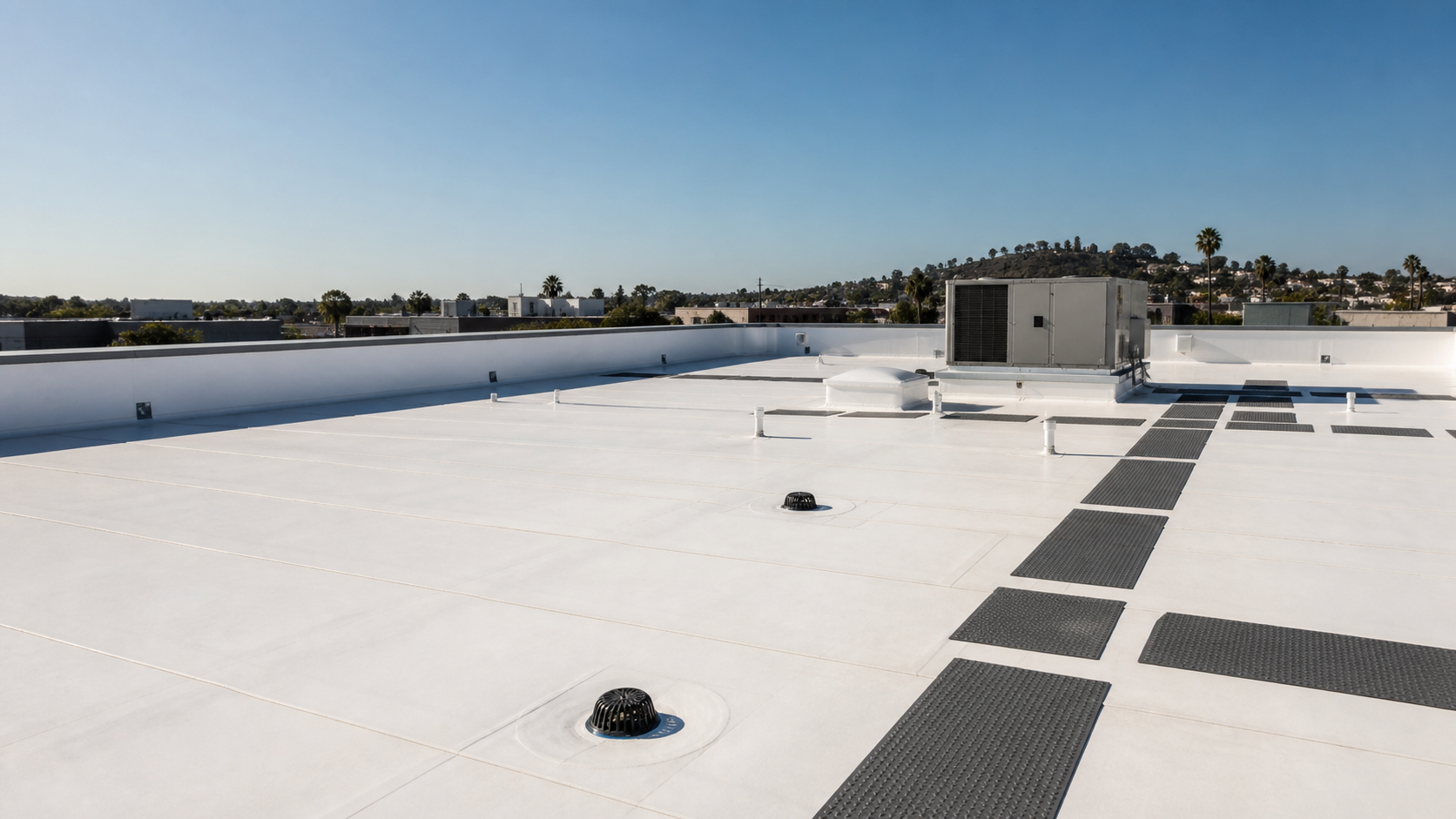
TPO roofing, or thermoplastic polyolefin roofing is a thin roofing membrane made from rubber and plastic mostly used on commercial properties. TPO roofing is a great choice for low slope or completely flat roofs. A roof’s drainage, insulation, and condition needs to be considered if you’re switching to TPO roofing. Reach out to find out if TPO roofing San Diego is right for your property!
Request a TPO roof assessmentStart with the building
Is TPO Roofing a Good Fit for San Diego Buildings?
TPO roofing in San Diego is a great option if you want a lightweight and cost-effective material, but it’s not for every property.
Where TPO Makes Sense
Warehouses, large office buildings, some multi-family properties and other structures with flat roof sections benefit the most from TPO roofing. When considering roofing systems, make sure to consult with a professional roofing contractor to ensure you make the best choice.
Conditions That Need Closer Review
If you are considering TPO roofing but struggle with effective drainage, have damaged decking, heavy roof traffic, or lots of roof top equipment, TPO roofing may not be the best option. Working with us ensures you make the right decision every time.
More than a white sheet
What Does a TPO Roof Consist of?
Our TPO roofing San Diego service includes complete installation of the outer membrane, roof insulation, attachment system, roof draining and flashing. We use quality supplies when building your roof and take pride in our work. Every commercial roof install comes with a 10 year guarantee!
TPO Membrane and Reinforced Scrim
TPO is a reinforced single membrane with an overlapping sheet that is normally joined by hot air welds.
Mechanically Attached, Fully Adhered, and Induction-Welded Systems
With TPO roofing, we use hot air welding to attract your membrane to your roof. The method is chosen based on the roofing system used and other manufacturers requirements. We pick the best materials based on your roof size, weather exposure, and price preferences.
Mechanically attached
Fasteners and plates secure the system to the roof deck at designed locations.
Fully adhered
Approved adhesive bonds the membrane across the prepared layer below.
Induction welded
Electromagnetic energy welds the membrane to specially coated plates beneath it.
The right attachment method depends on the roof deck, wind requirements, building design, manufacturer specifications, and desired warranty.
A balanced decision
TPO Roofing Benefits and Tradeoffs in San Diego
TPO roofing is a popular roofing system choice because of its main advantages. It’s super energy efficient, so it lowers cooling costs and helps in hot areas. It’s cost effective, so businesses and homeowners love it. The materials are flexible so it lasts a little bit longer and is able to adapt to its environment a bit more than rigid materials.
Potential Advantages
Advantages to our TPO roofing San Diego services are the customization options we offer customers. You can customize your membrane thickness, supply details and basically how repairable or durable your roof will be in the future.
Tradeoffs and Failure Risks to Discuss Honestly
The trade off to TPO roofing San Diego is it’s not recommended for roofs with high rooftop traffic, poor drainage, seam & flashing errors, or any current roof penetrations. Every roofing system has pros and cons so we recommend doing research and consulting with a professional commercial roofing contractor.
Every roofing system has pros and cons, so we recommend doing your research and consulting with an experienced commercial roofing contractor.
Choose the assembly
60-Mil vs. 80-Mil TPO: Which Specification Fits the Roof?
Membranes that are 80 mil are thicker but not automatically better. You must consider your roof traffic, your buildings use, your roof manufacturer and what fits your budget.
Often used as a practical baseline specification when the complete assembly fits the building.
A thicker option that may be considered for added membrane robustness or a different warranty path.
Pricing without guesswork
How Much Does TPO Roofing Cost in San Diego?
TPO roofing San Diego can vary greatly depending on the size of the roof. Reach out below for a free, same day roofing estimate.
Request a free estimate →Five clear stages
TPO Roof Installation: From Inspection to Final Walkthrough
Our TPO roof installation process has been refined over decades and leave you with a quality roof done in a reasonable time.
1. Document the Existing Roof
Our first step is taking measurements and photographs to document the current condition of your roof. We conditioner leak history, moisture concerns, and structure to come up with a game plan.
2. Design the Assembly and Details
From there, we start the tear down covering all the old insulation, cover boards, aged membrane, any attachments, drainage, flashings, and whatever is left.
3. Prepare Deck and Substrate Layer
Wet, loose, damaged, or incompatible materials must be addressed before installing insulation, cover board, or membrane.
4. Place the Membrane and Weld the Seams
From there we meticulously secure the sheets, weld all our seams and complete any drains and transitions needed. We take pride in our work and leave you with a quality roof.
5. Inspect, Document, and Hand Over the Roof
Finally we clean up, document the new roof, go down our final checklist, and go over maintenance with the property owner. We make roof maintenance or replacement easy and want to be the roofing company you think of every time.
The details matter
Seams are only part of the system.
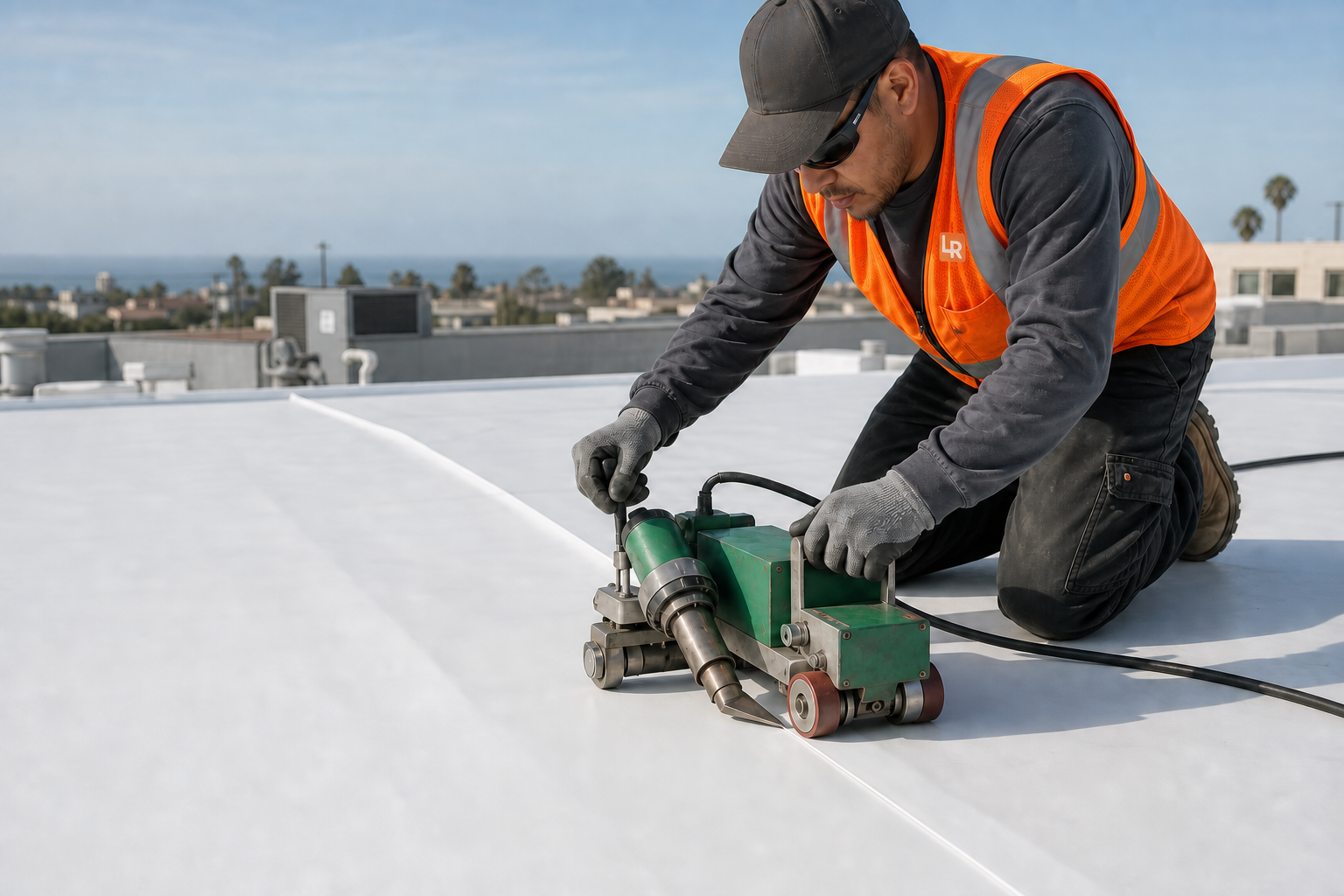
Quality hot air welds are important to building a quality TPO roof. Also, make sure your roofing company is experienced in drains, curbs, flashing, and transitions. At Local Roofers San Diego County, we take pride in our work and don’t stop until the job is done correctly.
Property-specific planning
TPO Roofing San Diego Design Factors
Sun and cool-roof requirements
TPO roofing products are great and help reduce the roof surface heat, which helps on your cooling bills. Additionally, TPO roofing San Diego is recommended by California energy organizations and specific TPO products have varying ratings.
Drainage during heavy rain
We consider the slope of your roof, the drains you have, and any areas of ponding to determine if TPO roofing San Diego is a good fit. Installing a membrane does not mean your roofing problems disappear, we always check for moisture before starting a project.
Coastal exposure
Salty coastal air can affect the life of metal roofs, roof equipment, and other fasteners we use. This is why we recommend regular roofing inspections to stay on top of damage. We’ll make sure your TPO roofing San Diego membrane is in good shape.
HVAC, solar, and rooftop traffic
We handle all the permits, building requirements, and project scopes. As a property owner, all you have to do is sit back and relax knowing a professional roofing company has your back. We are transparent and value your time as a homeowner.
Permits and building requirements
Requirements vary by address, jurisdiction, building type, and project scope. The applicable City or County process and current code requirements should be confirmed before work begins.
Compare the system, not the slogan
TPO vs. Other Flat Roofing Materials
| System | How it differs | When to discuss it |
|---|---|---|
| TPO | This thermoplastic membrane uses hot air welded seams. | Lightweight and low slope systems with different spec options fits the building. |
| PVC | Another thermoplastic single ply roofing system that uses welded seams. However, different from TPO. | PVC is best when your roof will face grease or chemical exposure, or the project calls for it. |
| Modified bitumen | A roofing sheet system made with polymer modified bitumen that is often installed using a different method depending on the product. | High roof raffic, roof compatibility, and age all guide this decision. |
| EPDM | This single-ply membrane uses seams with tape or adhesives rather than the hot air welding. | When the design preference, color options, or climate allows for it, EPDM worth comparing. |
The best material depends on your roof, property use, current drainage, weather exposure, and budget. Check out our page on modified bitumen roofing, built-up roofing, or commercial roofing for different roof options.
Protect your investment
TPO Roof Repair and Maintenance
Every long-lasting roof often followed a maintenance plan. If you want your roof to stand the test of time make sure to schedule annual roofing inspections and maintenance appointments. make sure to document your roof condition with photos and assess the condition as often as you can.
Accessing your roof can be hazardous if you choose to do it yourself. Make sure you practice proper safety procedures and use proper equipment. We always recommend hiring a professional TPO roofing San Diego team like us.
Warning signs to inspect
- Interior leaks or ceiling stains
- Cuts or tears in your roofing membrane
- Water ponding in low spots
- Damage around drains, pipes, and roof edge
- Wear and tear on walking pads
- Detached flashings or other materials
Choose carefully
What to Look for in a San Diego TPO Roofing Contractor
Estimates that are transparent and thorough.
- Licensed and insured roofing contractors.
- Past TPO roofing installation experience.
- Supply manufacturers name, brands being used, and TPO thickness.
- Understand the difference between contractor warranties and product warranties.
- Confirm permits, inspections, and proper safety processes
Straight answers
TPO Roofing San Diego FAQs
What does TPO roofing stand for?
TPO roofing stands for thermoplastic polyolefin. It is single-ply plastic roof membrane and we join it together with hot air welding.
Are TPO roofs only good for commercial properties?
No. TPO is a common roof system on commercial buildings. It can also be great for garages, ADUs, and properties with a flat or low sloping roofs.
How long will my TPO roof last me?
There is no exact answer for the lifetime of a TPO roof in San Diego. The life of the roof will depend on the materials you selected, roofing system, workmanship, exposure, rooftop traffic, maintenance schedule and more.
Is 60-mil or 80-mil TPO roofing better?
80 mil membranes are thicker, but the thickness is not the most important thing. All of your material choices make up your roof, so make sure to pick our best options offered.
Can TPO roofing San Diego be installed over existing roofs?
Sometimes. We’ll make a descision based on the age and current condition of your roof.
Is TPO roofing California Title 24 compliant?
Our TPO materials and systems often meet applicable requirements. However, the exact product rating and current project scope should be confirmed before installation.
Can solar panels be installed over TPO?
Yes, solar panels can be installed. When installing make sure to work at the proper areas to avoid moisture problems.
Can you install TPO roofing if I have water damage?
Every roof is different. We’ll evaluate your roof and make a suggestion based on what we see.
What should my TPO roofing estimate include?
Your TPO roofing estimate will cover price, roofing materials, and our expected timeline. We guarantee satisfaction and stand by our TPO roofs!
Start with the roof you have
Request a TPO Roofing San Diego Assesment
Share with us what you’re looking to get done, any know defects, or current quotes you already have. Our expert roofing team helps determine if a TPO roof or a different low slope roof is the best choice.